


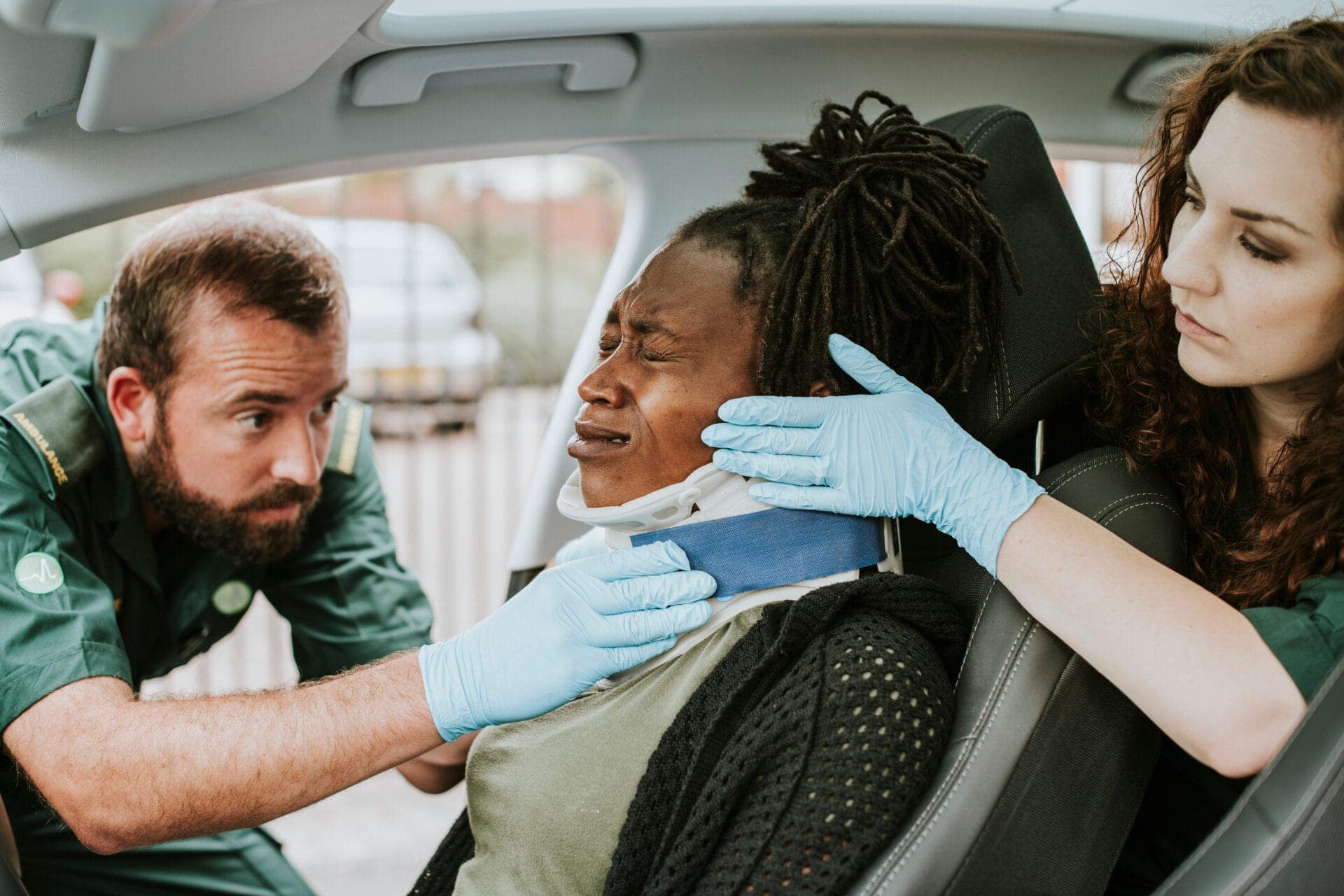
Knowing what to do after a car accident for your body begins with two priorities: recognizing possible emergencies and paying attention to changes in how you feel and move. A collision can affect the neck, back, joints, muscles, and nervous system, but the effects vary from person to person. Some problems are obvious at the scene, while other symptoms after a car accident become noticeable later. The five points below explain how to respond without assuming that soreness, stiffness, or another symptom proves a specific injury.
1. A Medical Evaluation Can Identify Needs That Symptoms Alone Cannot
Seek emergency help immediately if symptoms indicate a serious injury. Call 911 for difficulty breathing, severe bleeding, loss of consciousness, a seizure, increasing confusion, weakness or numbness, repeated vomiting, a worsening headache, or severe neck pain or back pain after the collision. Do not move someone who may have a head, neck, or spinal injury unless remaining in place creates an immediate danger or movement is necessary to provide lifesaving care.
The CDC’s guidance on traumatic brain injury warning signs identifies symptoms that require emergency attention, including a worsening headache, repeated vomiting, seizures, unusual behavior, slurred speech, weakness or numbness, unequal pupils, and an inability to stay awake. These warning signs should be directed to emergency medical services, not an outpatient injury clinic.
If you do not need emergency care, consider an appropriate medical evaluation when you develop pain, stiffness, headaches, dizziness, tenderness, reduced movement, tingling, or other concerns. A provider can ask how the collision occurred, examine the affected areas, test movement and neurological function when appropriate, and decide whether imaging, treatment, observation, or referral is warranted. The absence of immediate pain does not establish that an injury is present or absent.
This distinction matters because car accident injury symptoms can overlap. For example, a headache could be associated with a head injury, neck injury, stress, medication, or another cause. Back pain could reflect a strain, irritation of a joint or nerve, or a condition unrelated to the crash. Evaluation connects the symptom pattern with the medical history and physical findings rather than relying on guesswork.
2. Understand What Happens to Your Body After a Car Accident
What happens to your body after a car accident depends on the direction and force of impact, use of restraints, body position, prior health, and other circumstances. Sudden acceleration, deceleration, twisting, or contact with part of the vehicle may affect the neck, back, shoulders, knees, muscles, ligaments, and joints. The same collision can affect occupants differently, so vehicle damage alone does not determine whether someone is injured.
Whiplash is one possible neck injury after rapid back-and-forth movement of the head. According to the Mayo Clinic’s overview of whiplash, symptoms most often begin within days of the injury and may include neck pain and stiffness, reduced range of motion, headaches, shoulder or upper-back pain, tingling, fatigue, or dizziness. These symptoms do not confirm whiplash by themselves, and some require evaluation for other causes.
Muscles and other soft tissues may also be strained by the impact. Possible effects include soreness, tenderness, swelling, bruising, muscle tightness, or painful movement. Premier provides more information about soft tissue injuries after a collision, as well as separate resources addressing whiplash symptoms and back pain after a car accident. Use these resources to understand possible concerns, not to diagnose yourself.
Body pain after a car accident trauma may be localized or may affect several areas at once. Tell your medical care professional where the pain occurs, when it began, what it feels like, and which movements change your level of pain. These kinds of details are more useful to a healthcare provider than a broad statement that your whole body hurts.
3. Symptoms May Change During the Hours and Days After the Crash
Some symptoms appear immediately, while others become noticeable later. That timing can reflect the way a particular condition develops or simply the fact that discomfort becomes clearer after the stress surrounding the collision have passed. Do not assume that every new symptom was caused by the crash, but do not dismiss a meaningful change merely because you initially felt well.
Monitor pain, stiffness, headaches, dizziness, nausea, vision changes, sensitivity to light or noise, concentration problems, tingling, numbness, weakness, balance problems, swelling, bruising, sleep disruption, and reduced range of motion. Seek prompt medical advice if a symptom appears, persists, or worsens. Use emergency services if any danger signs develop.
Keep a short daily record of symptoms, ongoing pain, and improvement. Note when each symptom began, its location and intensity, whether it is improving or worsening, and how it affects driving, working, sleeping, walking, lifting, or turning your head. Record medications taken and appointments attended. This is a practical clinical history, not proof of a diagnosis or a reason to repeatedly test painful movements.
Pay special attention after a blow or jolt to the head or body. A concussion does not always involve loss of consciousness. Confusion, memory problems, vision changes, nausea, vomiting, or a sudden severe headache after a significant impact or head injury warrant medical attention. If symptoms intensify or match an emergency warning sign, call 911.
4. Car Accident Recovery Should Follow an Individualized Plan
Car accident recovery is not the same for every patient. The appropriate plan depends on the diagnosis, severity of the injury, medical history, functional limitations, and response to care. One person may need brief monitoring and home guidance; another may need medication, rehabilitation, specialist care, imaging, or a combination of services. An article cannot establish the right plan or predict a recovery date for an individual reader. Seek a comprehensive evaluation by a professional healthcare provider.
Follow the instructions given by the healthcare professionals who evaluate you. Ask which activities are safe, whether you have lifting or driving restrictions, how and when to return to work or exercise, and what changes should prompt another evaluation. Do not begin forceful stretching, strengthening, spinal manipulation, or a generic online exercise program without knowing whether it is appropriate for your condition.
Rest may be useful during part of recovery, but complete inactivity is not automatically the best response to every musculoskeletal injury. When a provider recommends movement, the plan may progress from comfortable daily activity to mobility work and then to strengthening or task-specific exercise. The pace should respond to symptoms and clinical findings instead of an arbitrary timeline.
For appropriate non-emergency musculoskeletal conditions, rehabilitation therapy after an auto injury may include guided mobility, flexibility, stability, or strengthening exercises. Chiropractic care may be one part of a treatment plan for some patients, but it is not suitable for every injury and does not replace emergency care or needed medical specialty care.
5. Track Function as Well as Pain While Recovering
Recovering after a car accident involves more than deciding whether pain is present on a given day. Function also matters. Notice whether you can turn your head while driving, sit or stand comfortably, walk normally, lift routine objects, sleep, concentrate, and complete work or household tasks. A gradual return of comfortable movement and ordinary activity can help a provider assess progress, while new limitations may indicate a need to reconsider the plan.
Useful car accident recovery tips are simple: keep follow-up appointments, take medication only as directed, perform prescribed home exercises correctly, avoid activities that exceed current restrictions, and report material changes. Tell your provider if symptoms shift to a new area, pain repeatedly increases after a particular activity, or progress has stalled. Do not alter or end prescribed care solely because of advice found online.
Recovery can also affect sleep, mood, concentration, transportation, and work. Discuss those difficulties with the appropriate provider rather than treating them as unrelated inconveniences. If you receive care from more than one professional, keep an updated list of appointments, medications, diagnoses, restrictions, and exercises so each provider has accurate information.
Progress is rarely measured by one perfect day. Look for patterns over time: fewer limitations, improved tolerance for routine activity, better range of motion, or less frequent symptoms. A temporary increase after activity does not by itself prove reinjury, but persistent or worsening problems deserve professional review.
When Premier Injury Clinics of DFW May Be an Appropriate Next Step
Premier Injury Clinics of DFW evaluates and treats accident-related musculoskeletal complaints when outpatient chiropractic or rehabilitation services may be appropriate. An evaluation may address pain, stiffness, tenderness, movement limitations, posture, and the way symptoms affect ordinary activities. Treatment recommendations depend on the patient’s findings and may include chiropractic care, guided rehabilitation, mobility exercises, or referral to another provider.
Patients can learn more about Premier’s approach to auto injury evaluation and treatment. If you have non-emergency neck pain, back pain, soreness, stiffness, or reduced mobility after a collision, you may contact Premier Injury Clinics of DFW to request an evaluation. Call 911 or seek emergency medical care for serious or potentially life-threatening symptoms.